Our countries
Five kitchens, five stories
Every dish on our menu is our take on a tradition we admire. Here is where each one comes from.
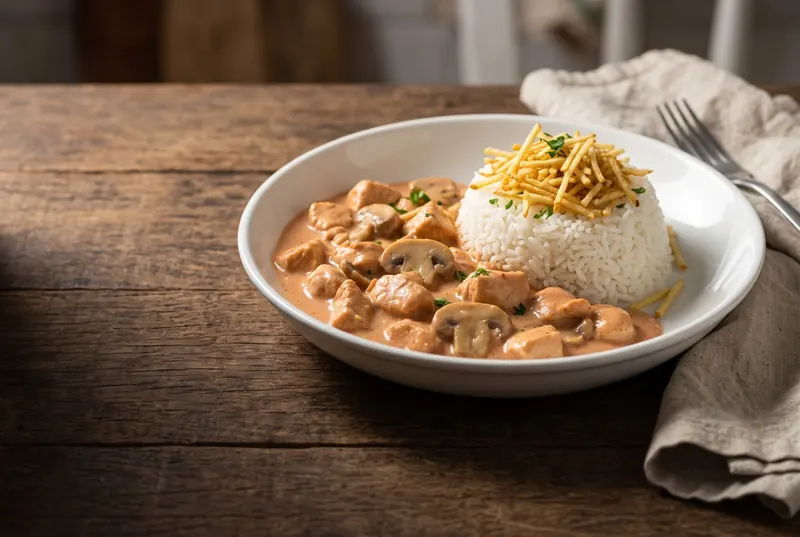
Brazil
Chicken Strogonoff
A dish that traveled the world before settling in Brazil. Stroganoff began in 19th-century Russia, and as it moved through Europe and across the Atlantic, Brazilian cooks made it their own: tender chicken in a creamy sauce brightened with a little tomato and mustard, served with white rice and crunchy batata palha (shoestring potatoes).
In Brazil it is a family favorite, the kind of dish that means a comfortable Sunday at home.
Ready in about 25 minutes.
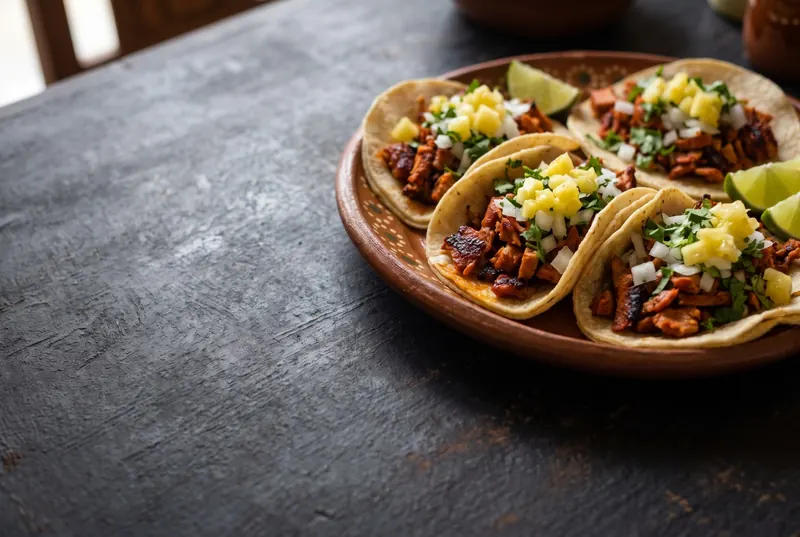
Mexico
Tacos al Pastor
Al pastor is a story of migration. Lebanese families who settled in Mexico in the early 20th century brought spit-roasted meat with them, and over the decades Mexican cooks transformed it with pork, dried chiles, achiote and pineapple until it became a taco icon of Mexico City.
Our version marinates pork overnight in guajillo chiles, achiote and spices, then serves it on corn tortillas with pineapple, onion, cilantro and lime.
Prepared a day ahead: order by the day before.
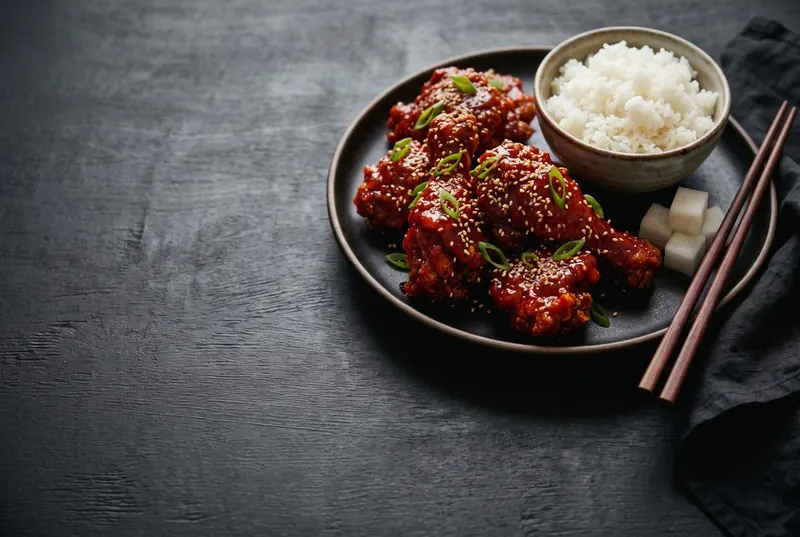
Korea
Korean Fried Chicken with Rice
Fried chicken arrived in Korea in the mid-20th century, and Korean cooks made it unmistakably their own: double-coated for an audible crunch, then glazed in a sweet-and-spicy sauce built on gochujang, a fermented chili paste at the heart of Korean cooking.
In Korea, fried chicken is something friends share. We finish ours with sesame seeds and scallions, and serve it with rice.
Ready in about 20 minutes.
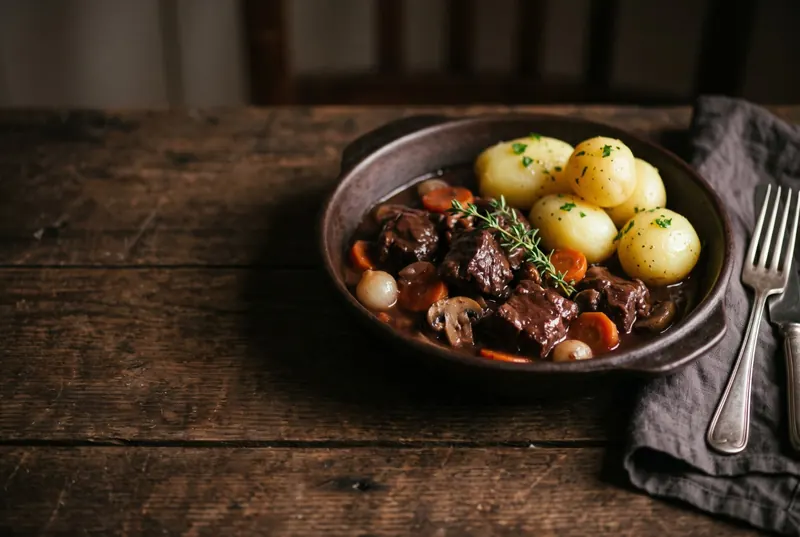
France
Beef Bourguignon with Potatoes
From Burgundy in eastern France, bourguignon is farmhouse cooking at its most patient: beef braised slowly with mushrooms, carrots, onion and thyme until it falls apart.
The classic uses Burgundy wine. Ours is alcohol-free: we braise with unsweetened red grape juice, so everyone can enjoy it.
Braised a day ahead: order by the day before.
Mongolia
Khorkhog
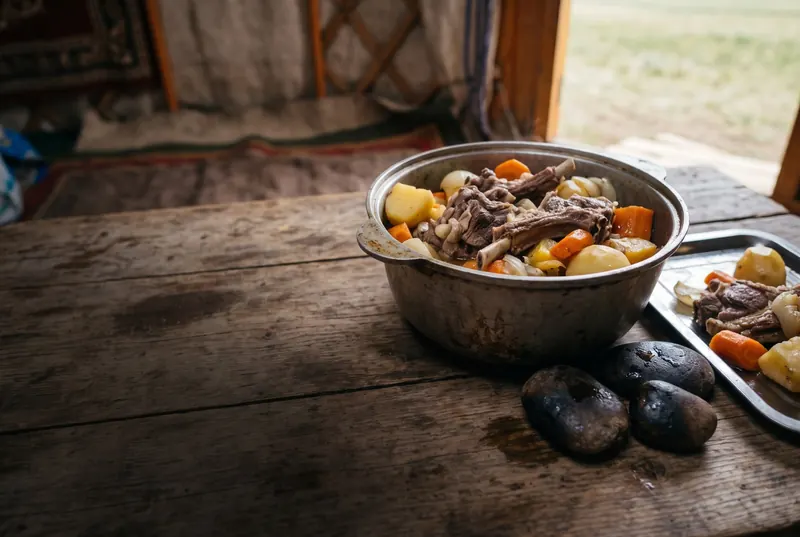
Khorkhog is a celebration dish from Mongolia's open grasslands. Traditionally, meat and vegetables are cooked in a sealed container with stones heated in a fire; the hot stones steam and roast everything from the inside, and guests often pass the warm stones from hand to hand.
Traditional khorkhog is usually mutton or goat. Ours uses lamb shoulder with potatoes, carrots, onion and garlic, seasoned simply with salt and pepper so the meat speaks for itself.
Cooked fresh the same day: about 2 hours.